
Floating Parachutes

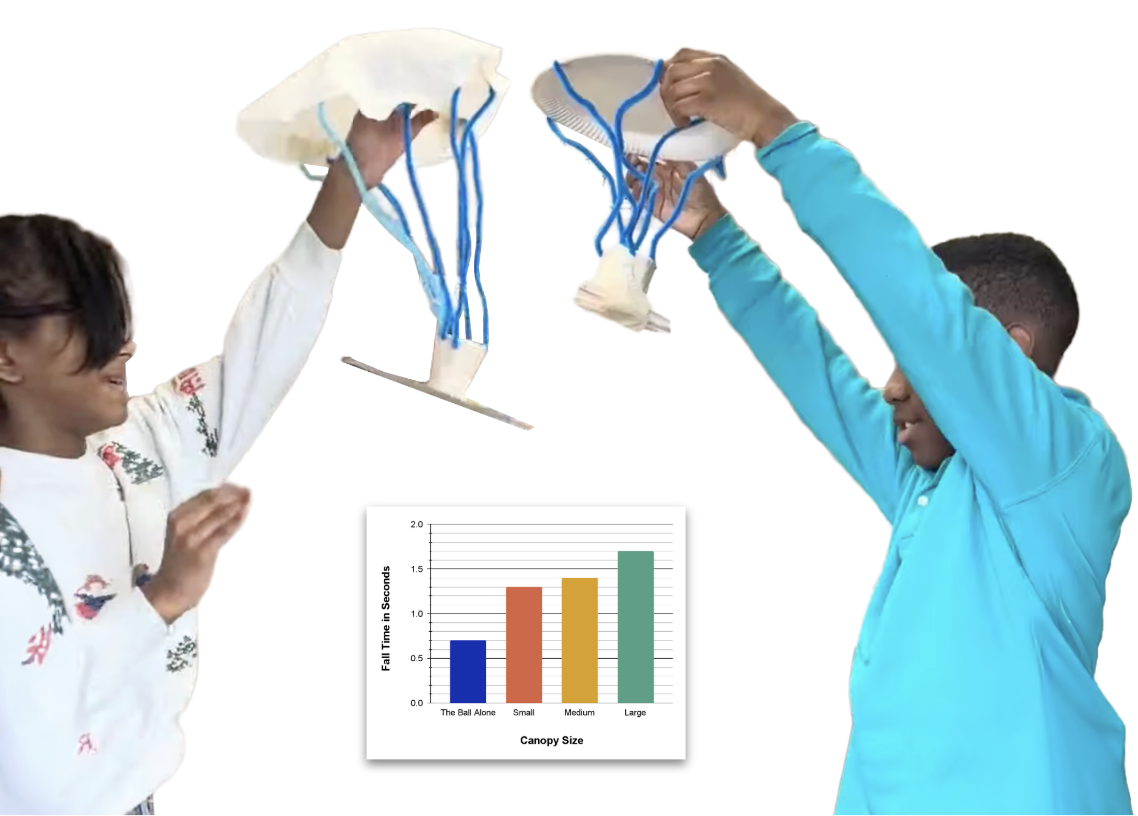
A toy inventor's parachute falls too fast — and the ball tumbles out on landing. Students are recruited as engineers to fix it. They investigate how gravity and drag interact to control how quickly things fall, then test how canopy size, suspension line materials, and landing base each affect drop time and stability. The unit culminates in a design challenge: build a parachute that floats for two or more seconds and lands its passenger safely.
What Students Learn
How gravity pulls objects downward, and drag pushes back
How surface area affects the amount of drag a falling object experiences
How each part of a parachute — canopy, suspension lines, and landing base — contributes to overall performance
How scientists and engineers ask questions, gather evidence, and defend their thinking through all 8 Science and Engineering Practices
What's Included
10 slide-based lessons with embedded graphics and media
Step-by-step teacher guide with facilitation notes
Student worksheet packet with assessments
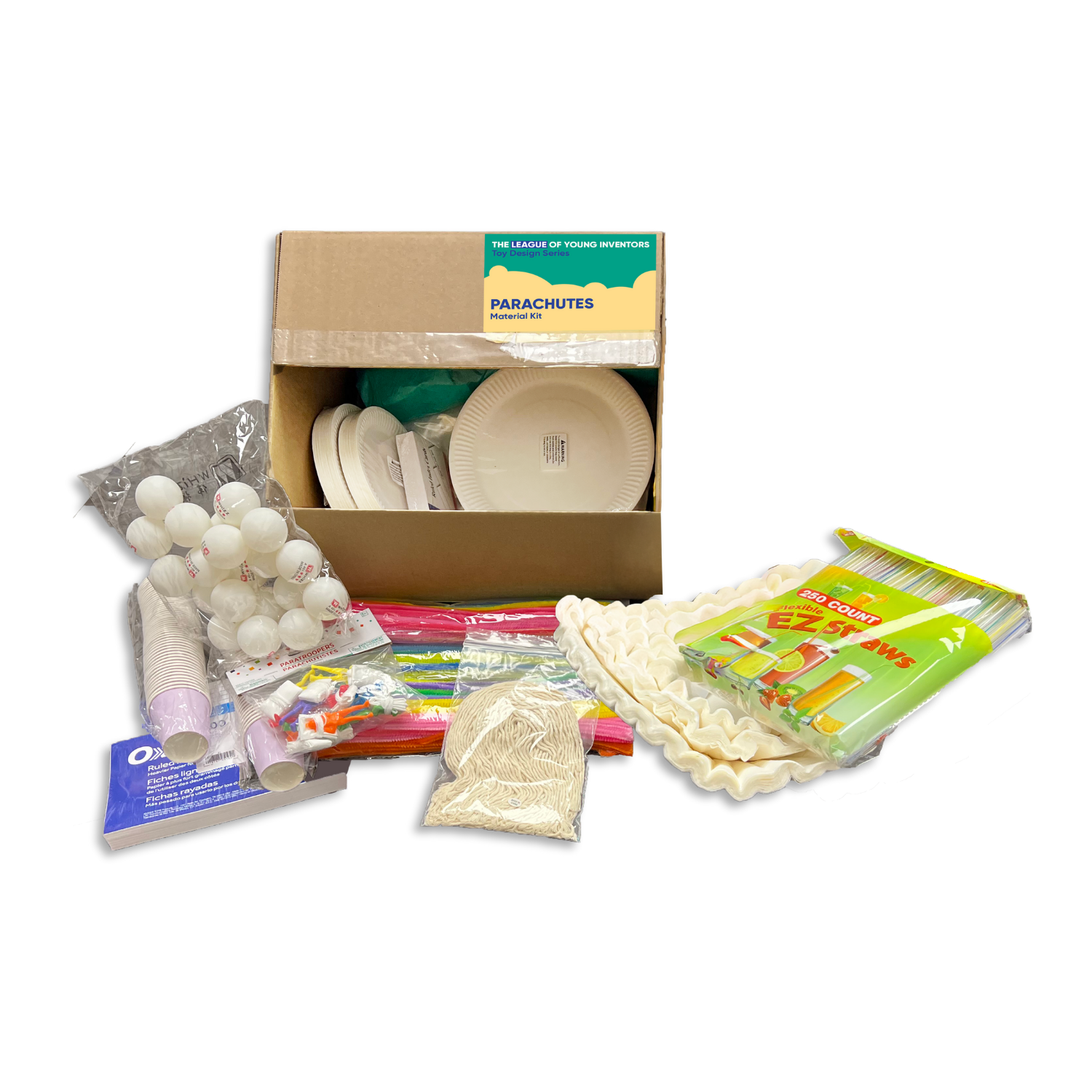
All hands-on building materials for up to 30 students
Maker skill video tutorials
Optional Egg Drop Challenge extension
Standards Alignment
NGSS Covered & Reinforced
Parachutes for GR 2-3
Forces and Motion: 3-PS2-1 · 3-PS2-2
Engineering Design: K-2-ETS1-1 · K-2-ETS1-2 · K-2-ETS1-3
Parachutes for GR 4-5
Forces and Motion: 3-PS2-1 · 3-PS2-2 · 5-PS2-1
Engineering Design: 3-5-ETS1-1 · 3-5-ETS1-2 · 3-5-ETS1-3
Parachutes for GR 6-8
Forces and Motion: MS-PS2-2
Engineering Design: MS-ETS1-1 · MS-ETS1-2 · MS-ETS1-3 · MS-ETS1-4
Crosscutting Concepts